

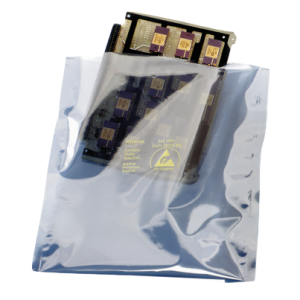
Circuit boards burn out silently during shipping when static shielding bags charges build up on standard packaging. Electronic assemblies, semiconductor chips, and sensitive storage drives need specific protective materials during handling and transit. Electrostatic discharge creates invisible voltage spikes that damage microscopic silicone traces before components reach their final destination.
We manufacture electrostatic control supplies to protect delicate parts across modern assembly lines and global distribution networks. Choosing the right material requires understanding surface resistivity, charge transfer rates, and environmental factors. Our practical breakdown covers the four core types of electrostatic discharge materials, their technical differences, and exact matching criteria for your production requirements.
Technical Performance Standards for Static Materials
Electrostatic properties depend on surface resistance measured in ohms per square. Standard industrial criteria divide packaging films, trays, and foams into distinct operating tiers based on electrical conductivity and charge transfer speed.
Antistatic Packaging Properties and Applications
Antistatic materials prevent static charge generation caused by direct contact or friction. Standard polyolefin plastics gather electrical potential when rubbed against cardboard boxes or operator clothing. Antistatic materials incorporate topical chemical agents or internal additives to reduce surface friction.
Material Characteristics
Pink poly bags utilize chemical additives that attract ambient air moisture to form a microscopic conductive film across the surface. This thin fluid layer prevents triboelectric charging during movement.
- Surface resistance stays between $10^{9}$ and $10^{11}$ ohms per square.
- Bright pink or blue coloring identifies antistatic properties on assembly floors.
- Lightweight polyethylene construction resists tearing and puncture under normal load.
Key Operational Limitations
Topical coatings degrade over time due to cleanroom wiping, dry atmospheric conditions, and normal handling friction.
- Pink anti static bags do not shield enclosed components against outside electrostatic fields.
- Ambient humidity directly influences surface moisture layers and performance.
- Direct contact with sensitive circuit leads can cause chemical transfer or corrosion over extended storage periods.

Dissipative Packaging Mechanics for Controlled Discharge
Dissipative materials allow electrical charges to flow slowly toward ground points across a controlled surface resistance path. Controlled movement prevents sudden electrical arcing that damages sensitive microchips.
Protection Characteristics and Features
Dissipative packaging options, including carbon-loaded trays and surface-treated rubber mats, maintain steady electrical resistance regardless of surrounding atmospheric moisture levels.
- Surface resistance measures between $10^{5}$ and $10^{11}$ ohms per square.
- Discharge speeds range from 0.01 seconds to 2 seconds, eliminating sudden current spikes.
- Uniform material composition provides permanent resistance properties that never rub off.
Primary Industry Use Cases
Assembly plants utilize dissipative packaging for internal transport, field servicing, and temporary storage near workbenches.
- Workstation bench covers and floor matting in protected handling areas.
- Component trays holding unmounted integrated circuits during surface-mount assembly.
- Custom-molded storage boxes carrying sub-assemblies across factory departments.
Conductive Packaging for Rapid Current Flow
Conductive packaging incorporates carbon particles or metallic fibers directly into plastic polymers. This structure provides low electrical resistance, allowing charges to move instantly across the outer surface to ground connections.
Material Structure and Advantages
Black conductive bags, corrugated plastic boxes, and rigid storage bins provide durable protection across industrial environments.
- Low surface resistivity rating of $10^{3}$ to $10^{5}$ ohms per square.
- Carbon-impregnated resins maintain permanent conductivity unaffected by ambient humidity.
- Opaque black walls obscure internal contents and block light exposure.
Strategic Applications
Conductive containers drain large surface charges rapidly away from delicate assemblies before components enter grounded work areas.
- Rigid tote boxes used on automated conveyor systems.
- Heavy-duty matrix trays designed for dense circuit board storage.
- Conductive foam inserts holding bare integrated circuit pins during shipping.
Shielding Packaging and the Faraday Cage Effect
High-performance static shielding bags offer complete electrostatic protection by combining conductive metal layers with dielectric polymer films. This layered structure creates a Faraday cage that redirects outside electrical currents around the exterior, keeping sensitive components safe inside.
Multi-Layer Construction Specs
Effective shielding bags rely on layered construction to protect sensitive electronics:
- Outer Polyester Layer: Provides mechanical strength, scuff resistance, and dielectric insulation.
- Metalized Aluminum Layer: Forms an electrical shield that blocks outside static discharge.
- Inner Polyethylene Layer: Prevents static charge generation from internal component movement.
Crucial Benefits for Sensitive Gear
Shielding containers protect assembled printed circuit boards, solid-state storage drives, and network controllers during external transit. Enclosing bare boards inside multi-layer esd bags stops sudden voltage spikes from penetrating internal circuitry.

- Metalized semi-transparent layers allow fast barcode scanning without opening heat seals.
- Moisture barrier variants block humidity penetration during long ocean freight shipments.
- Puncture-resistant construction keeps sharp component leads from piercing the conductive layer.
Selecting the Right ESD Packaging Material
Selecting appropriate packaging requires evaluating component static sensitivity ratings, shipment distances, and cleanroom environmental conditions.
Essential Steps for Material Selection
Follow these steps to choose the correct material for your production line:
- Verify Human Body Model (HBM) Sensitivity: Identify the maximum voltage threshold your electronic component can endure before experiencing gate oxide rupture.
- Evaluate Transport Risks: Use rigid conductive containers or multi-layer shielding bags whenever items leave protected handling zones.
- Assess Mechanical Requirements: Choose flexible bags for lightweight circuit boards and rigid carbon-loaded boxes for heavy power supply units.
- Inspect Environmental Conditions: Select moisture barrier shielding films when shipping items through humid environments.
Conclusion
Understanding the distinct roles of antistatic, dissipative, conductive, and shielding materials ensures your electronic components remain protected from costly electrostatic damage. Matching surface resistance properties to your component’s sensitivity prevents latent circuit failures and reduces product returns across the supply chain.
At ELCOM, we manufacture reliable static control solutions, including high-performance static shielding bags, anti static bags, dissipative matting, and conductive packaging, ensuring your technology stays fully protected throughout storage and transit.
Frequently Asked Questions
What is the primary difference between antistatic and shielding materials?
Antistatic materials prevent static charge generation caused by friction on the bag’s surface. Shielding materials incorporate a metallic layer that forms a Faraday cage, blocking external electrical fields and direct static discharges from reaching internal electronics.
Can old static shielding bags be reused safely on assembly lines?
Reusing shielding bags is acceptable only if the metallic film remains free of tears, deep creases, or pinhole punctures. Cracks in the inner metal layer disrupt the Faraday cage effect, reducing protective capabilities.
Why do pink antistatic bags deteriorate over time?
Pink antistatic bags use surface antistatic chemical additives that absorb ambient air moisture. Over time, these chemical agents dissipate, wash off, or evaporate, causing the plastic surface to lose its antistatic properties.
What packaging is required for shipping hard drives and solid-state drives?
Solid-state and magnetic storage drives require multi-layer static shielding bags or moisture barrier shielding pouches. Storage drive controller boards contain sensitive components that can suffer latent gate damage from small external static discharges.