


Static electricity causes millions in hidden component damage across assembly lines every year. Invisible discharges ruin microchips long before products reach customers, creating unexplained field failures that damage brand reputations. We see electronics manufacturers struggle during compliance inspections simply because their protective grounding lacks procedural backing.
Setting up a factory floor that satisfies international auditors requires aligning physical safety items with clear administrative documentation.
Understanding the technical framework behind esd flooring, wrist straps, and grounding points helps us build operational zones that safeguard sensitive electronics.
Both international standards set the technical parameters for preventing static risk during manufacturing, handling, and packaging. We will walk through how these two standards interact and how to implement a control plan that passes every audit with ease.
Understanding the Core Frameworks of Static Safety
Two global standards govern electrostatic discharge management across modern assembly facilities: BS EN IEC 61340-5-1 and ANSI/ESD S20.20. While ANSI/ESD S20.20 originated in North America and BS EN IEC 61340-5-1 serves Europe and international markets, both standards share common technical objectives. They specify administrative requirements alongside physical control limits to protect components vulnerable to static voltages above 100V.
Setting up a compliant facility means treating these documents as living systems rather than static checklists. Auditors look for consistency between daily floor actions and written safety procedures. When we harmonize both frameworks inside our facility, we establish a robust defense against sudden static discharges.
Primary Operational Requirements
- Administrative Master Plan: A written guide detailing how your facility implements, monitors, and maintains static controls.
- Personnel Safety Grounding: Mandatory wrist strap systems and footwear ground configurations for every worker entering protected areas.
- Defined Protected Areas: Clear physical boundaries separating safe zones from standard factory floors.
- Compliance Testing Records: Logs documenting routine daily, weekly, and monthly resistance measurements.
Designing an ESD Protected Area That Meets Compliance Standards
An ESD Protected Area (EPA) functions as a controlled environment where static charges cannot build up or transfer suddenly to sensitive assemblies. Boundaries require clear physical signage and distinct floor markings to notify employees and visitors. Inside this perimeter, all conductive and dissipative objects must connect directly to a verified common ground point.
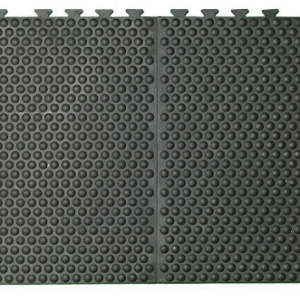
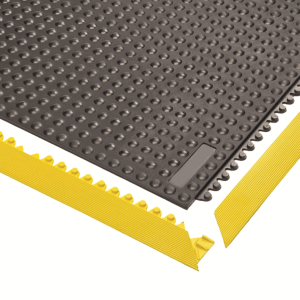
Grounding path integrity determines whether an EPA passes third-party checks. Every surface, chair, storage rack, and tool inside the boundary must dissipate charges safely into the earth. Installing high-performance anti static flooring creates a reliable foundation that drains static from mobile workers and wheeled carts without interruption.
Essential EPA Equipment Setup
- Grounded Worksurfaces: Dissipative mats or benches offering resistance-to-ground measurements between $1 \times 10^6$ and $1 \times 10^9$ ohms.
- Conductive Flooring Infrastructure: Interlocking or glued esd floor tiles linked directly to copper grounding strips beneath the subfloor.
- Continuous Monitoring Devices: Workstation units that verify operator wrist strap continuity in real time.
- Air Ionization Equipment: Neutralizer units positioned near non-conductive assembly tools to eliminate localized surface charges.
Aligning Personnel Grounding with Floor Systems
Effective static protection relies heavily on personnel grounding methods. Seated workers must use connected wrist straps, whereas standing or mobile staff require combined footwear and floor grounding systems. When workers move through production bays, continuous contact between footwear and dissipative floor surfaces replaces the need for tethered cords.
Combining dissipative footwear with resilient esd flooring ensures body voltage stays well below the 100V threshold required by both standards. Testing this combination requires daily verification before staff enter handling zones.
- Wrist Strap Resistance: Must measure between $7.5 \times 10^5$ and $3.5 \times 10^7$ ohms during daily checks.
- Footwear Resistance Limits: Individual shoes or heel grounders must measure under $3.5 \times 10^7$ ohms.
- System Combination Test: Standing body voltage tests must demonstrate less than 100V generation during normal walking steps.
Preparing Administrative Documentation for Third-Party Audits
Physical equipment alone will not pass a standard audit. Inspectors review administrative logs to verify that equipment undergoes regular maintenance and monitoring. Your compliance verification program needs clear testing schedules, defined pass or fail thresholds, and documented corrective actions for broken equipment.
Training records represent another frequent area for audit findings. Every employee, supervisor, and visitor entering an EPA must complete documented training matching their access level. Retraining schedules must run on a fixed annual or bi-annual cycle to maintain compliance.
Steps to Prevent Common Audit Failures
- Ground Unattached Hardware: Connect newly added shelves, lamp brackets, or monitor mounts to common point grounds immediately.
- Isolate Standard Plastics: Keep ungrounded insulators like coffee cups, document folders, and synthetic bags at least 30 cm away from sensitive components.
- Log Daily Verification Tests: Keep digital or physical entry logs updated for every shift without missing records.
- Calibrate Audit Meters: Ensure megohmmeters and surface resistance probes hold valid calibration stickers during inspections.
Conclusion
Building a compliant static protection program requires balancing physical safeguards with detailed administrative tracking. By implementing robust grounding infrastructure, continuous compliance testing, and thorough personnel training, your facility can maintain safe production standards year-round.
Durable esd flooring provides the foundation needed to protect microelectronics, minimize product scrap rates, and meet rigorous ISO or customer quality standards. Partnering with experienced specialists like ELCOM ensures your facility selects the right technical materials to build an ESD control program that easily passes every audit.
Frequently Asked Questions
What is the main difference between BS EN IEC 61340-5-1 and ANSI/ESD S20.20?
The technical limits across both standards are virtually identical. BS EN IEC 61340-5-1 serves European and international operations under IEC guidelines, whereas ANSI/ESD S20.20 originates from North America. Facilities can align their physical setup to satisfy both frameworks simultaneously.
Why is static dissipative flooring necessary in an EPA?
Grounding mats alone cannot protect mobile operators or wheeled transport equipment. Dissipative floor installations maintain a continuous path to ground across the entire floor plan, bleeding off static charges generated by foot traffic or moving cart wheels.
How often should we test worksurfaces and grounding points?
Wrist straps and footwear require daily testing before workers enter an EPA. Fixed worksurfaces, floor surfaces, and grounding connections typically undergo monthly or quarterly compliance verification using calibrated resistance meters.
Can standard cleaning products be used on static control floors?
Standard floor waxes and commercial cleaners leave insulating layers that block ground paths. Facilities must use dedicated non-insulating cleaners specifically formulated to maintain surface conductivity without damaging protective materials.